Creating Timothy Turtle: The Journey of an Art Sculpture for Haller Park by Artist Alice Burgin
Updated: 6 days ago
Public art brings communities together, sparking curiosity and pride in shared spaces. In Arlington’s Haller Park, a new sculpture named Timothy Turtle is set to become a beloved landmark this summer. Created by artist Alice Burgin, this piece combines steel, concrete, rocks, and blue glass to capture the spirit of a turtle in a unique and lasting form. The story behind Timothy Turtle reveals the careful planning, craftsmanship, and creativity that go into making public art.

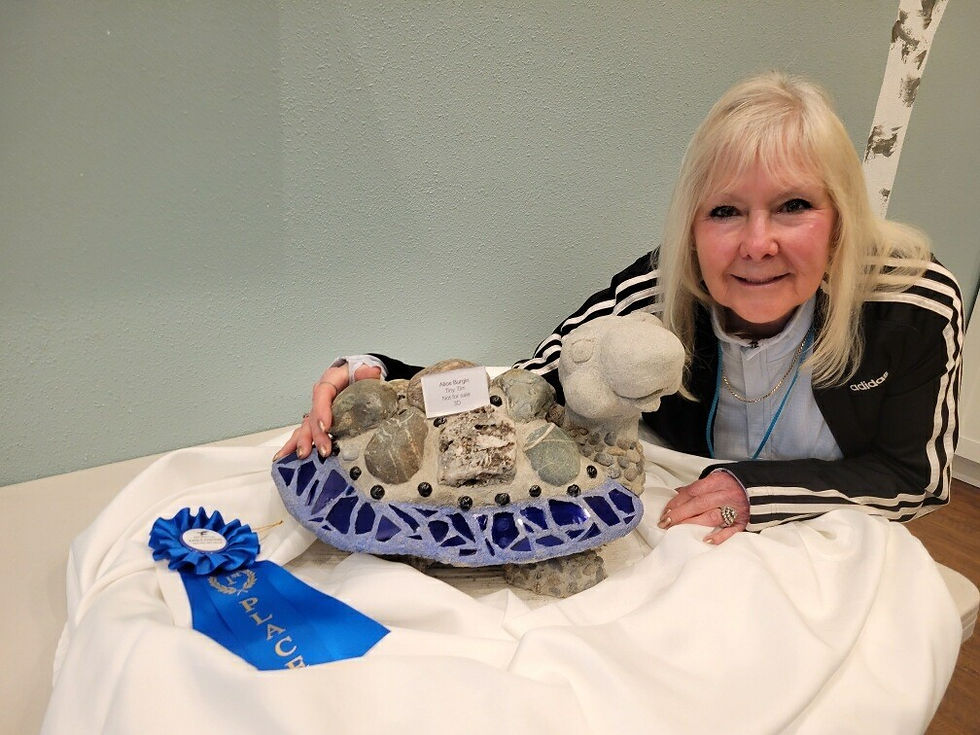
Alice was inspired to create a new turtle sculpture for the park, reminiscent of a beloved piece she had crafted in the past. To refine her vision, she presented her ideas to the arts council members, seeking their feedback. With their input, she developed a small model of the turtle, which she proudly showcased at the nature art show, where it won 1st place in the 3D division. Buoyed by this success, Alice applied for funding through the City of Arlington's public art program. Her proposal was met with enthusiasm, and she received approval from the Parks, Arts, and Recreation Commission for the 2026 art program, bringing her dream of a new turtle sculpture one step closer to reality.
Designing the Sculpture
Alice Burgin began the project by envisioning a turtle that would fit naturally into the park’s playful splash pad environment. She wanted the sculpture to feel both strong and approachable, reflecting the slow, steady nature of turtles. The design process started with sketches, and measuring, and the small model, which helped refine the shape and details.
Building the Frame and Body
Once a conceptual design created, Alice moved on to consulting with an Arlington metal fabricator business owner, Matthew Burke. Matthew refined the design and set to work on creating the "skeleton." The frame is made of steel, chosen for its strength and durability. This skeleton supports the weight of the concrete body and ensures the sculpture withstands outdoor conditions.

Acquiring the Right Blue Glass
In her quest for the perfect blue glass, Alice initially placed an order, but the glass unfortunately turned out to be too small for her needs. Frustrated but determined, she decided to reach out to Pilchuck Glass School, a renowned institution known for its expertise in glassmaking.
Upon contacting Pilchuck, she was met with a wealth of knowledge and assistance. The team guided her through the entire process, ensuring that she understood the specifications required to create the right size and texture of glass. They emphasized the importance of not only achieving the desired dimensions but also ensuring that the glass would be smooth and brilliant, prioritizing both safety for children and aesthetic appeal.
With Pilchuck's support, she was able to successfully create a stunning piece of blue glass that met all her requirements, combining beauty with functionality in a way that perfectly suited her vision.

"A HUGE DAY! Putting the glass into 2 big kilns to adjust the calculations for the first time! We’ve been using small kilns for glass tests… but this much glass into different kilns? Will I ruin everything?"
Michael Endo did the final calculations before firing along with Tyler Gorden, the Campus Director - The two top people at Pilchuck Glass School and important people to Dale Chihuly! A HUGE DAY!
Selecting the Right Rocks
Alice was very particular about choosing the perfect rocks to complement the design on the turtle's back and legs. Her selection process involved several key considerations:
Size: Alice carefully evaluated the sizes of the rocks to ensure they would fit seamlessly into the overall design. Each rock needed to be proportionate to the turtle's body, enhancing its appearance without overwhelming it.
Shape: The shapes of the rocks were crucial as well. Alice sought out unique forms that would add interest and texture to the turtle's design. The right shapes could create a more dynamic and visually appealing look.
Color and Veining: Selecting native stones with variations in color and veining was essential to Alice. These natural variations would not only highlight the beauty of the stones but also create a harmonious blend with the turtle's natural colors.
To find the ideal stones, Alice made several trips to Lenz Enterprises in Stanwood. Each visit allowed her to explore a diverse selection of rocks, ensuring that she could handpick the best options for her project.

Building the Body with Concrete
To create a robust and visually appealing structure, the process of building the body with concrete begins with a solid foundation. In this case, the construction started with the delivery of a metal frame to Alice. This frame serves as the skeleton for the concrete body.
Alice began by adding concrete mesh to the skeleton. Cutting the concrete mesh by hand can be quite challenging and hard on the hands. It's important to take precautions to protect your hands while working on this task. Alice had to develop a different kind of concrete mesh structure "cells" to hold vertical concrete in place.

Hand Molding the Concrete
(June 2026) With the frame in place, the next step involved hand molding the concrete. This meticulous process is carried out one section at a time, allowing for precise control over the consistency and texture of the material. Each layer of concrete is carefully applied to ensure a uniform thickness and adequate bonding with the metal frame.
(July) Alice starts with the tail and the legs, making "cells" out of concrete mesh, (6 mesh sheets so far by July). She Develops the tail, the legs and neck.

Next Step: Adding the Rocks
After the initial layers of concrete are set, the final layer will involve incorporating decorative rocks. Once the shape looks right, Alice puts on each rock, carefully selecting to go in specific areas and uniform shapes. The next day she covers each rock with "frosting" a think concrete to bury the bases of the rocks, setting them for life. These rocks not only enhance the aesthetic appeal of the structure but also add texture and character.
To complete the process, she will have to wash the rocks with an acid wash to remove the concrete dusting.
These rocks also connect the sculpture to the natural elements of Haller Park.
The blue glass pieces will be embedded in the concrete around the "skirt" of the turtle's back. This detail adds life and color to the sculpture.
Alice Narrates the Process...
Working on the foot, with toenails.
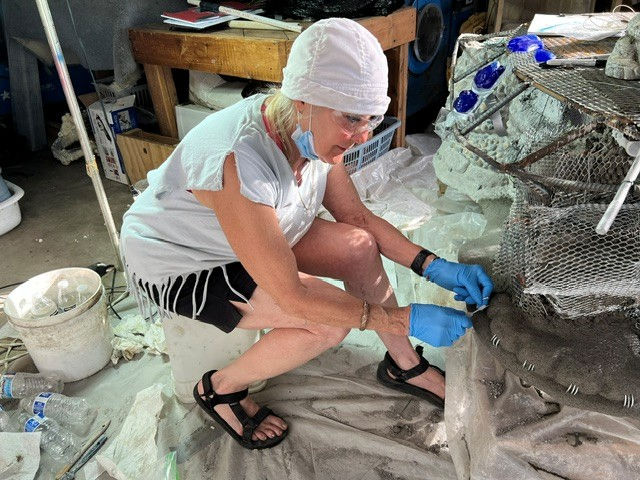
2. Developing “cells” of concrete wire mesh… which took a long time to make all the “cells” for one foot. A cell is a small “box” using concrete mesh to form the “walls” to put concrete onto without the concrete pouring out.

3. Picture of empty cells.

4. Filled cells with concrete.

5. Taking acrylic orange paint to draw the division of the foot, knee and thigh. It’s been very hard to maintain a visual concept in my head. The Orange paint is where I have to carve out concrete to establish between muscle groups. I don’t want just a blob of concrete and stones.

6. Back to my “rock store” to get special flat rocks for “his middle body”.

7. Putting on one rock at a time selecting bigger rocks in the middle then choosing slightly smaller rocks near the break of muscle area to feather the size down, so the leg might look like a leg.

8. Working on the kneecap…

9. After all the rocks are in place for a leg, I have wait a day to let the newly cemented rocks to stay in place. Then I mixup a batch of concrete and entirely cover all the rocks! I begin immediately at the covering starting point to begin removing some, not all the concrete just applied. This is to additionally make sure the rocks stay in forever…

10. After scraping out between every rock, each rock uncovered, must go through a painstaking process of washing any unwanted concrete left on the surface of any rock. This involves a long process of wiping many times, then a light spray of water to remove any concrete left as many times it takes to have the rocks “ clean and pretty” again! After all the rocks have “set or cured” ( to get very hard) which takes a month or two, ALL the rocks will get a light acid bath to take off any film left, eventually . I can apply a much harder hand, even using wire brushes to scrape off any residue.
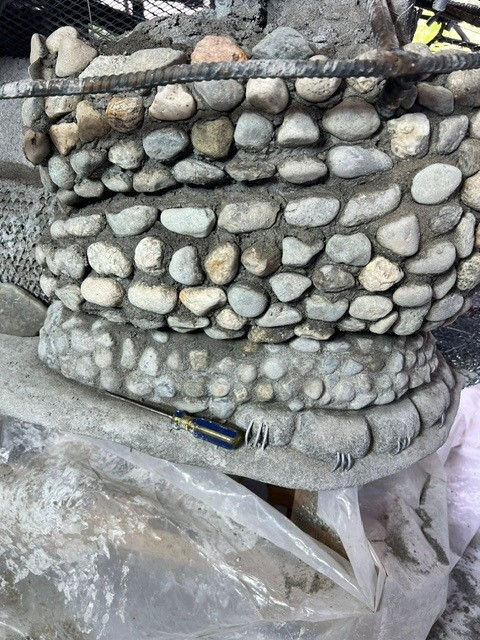
11. Time to do the 2 “sides” using the specially selected flat rocks from the rock store… testing to figure how to attach flat, heavy rocks…

12. Bath time to make sure they are clean with no gravel or sand is on them. The concrete won’t stick well if they have sand on them.

13. Up I go with concrete behind each rock. However, the rocks are heavier than the concrete can hold going vertical so “I” with many prayers had to tie each in with some of my “florists” wire. My knowledge of 65 years being a florist comes in a lot of knowledge that I wouldn’t have, otherwise.

14. The next day after setting up… time to fill in the cracks. I didn’t feel the need to completely cover these rocks with concrete. The next day I could tidy up any unwanted concrete by just wiping off and a light spray of water. The third day, I snipped off the retaining wires to expose the completed side.

15. Time for Timothy’s neck! Gulp! A whole new set of UNKNOWNS!!! I had to get many extra “bars of rebar” to develop the neck so it would be strong to hold much bigger pours of concrete! Rebar are 1/2” rods of steel used to make concrete strong. Rebar comes in different diameters depending on the job, 1/2” is a good size for this project.
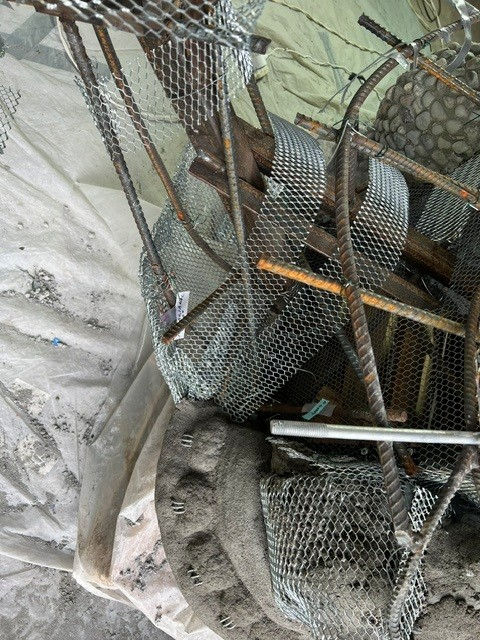
Problem!!!? I needed to find someone nearby to buy the rebar from… then to CUT it to the exact sizes that I needed for many areas inside. Arlingtons Ace Hardware was wonderful and patient with me making many, many cuts. Since then, I now have a grinder and a vice so I can cut my own rebar without bothering anyone. My great “metal guy” Matthew, who built the steel framework for Timothy, is not home because of his other jobs. I need lots of new rebar cuts for the rest of Timothy especially around the edge of “his” back where the Cobalt Blue Glass from Pilchuck Glass School is going!


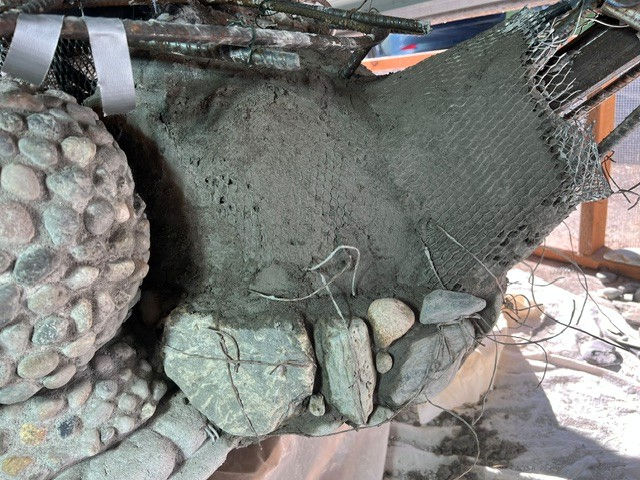

1. Creating the bottom shell.

2. The larger flat rocks for shell edge.

3. Attaching the larger, even heavier rocks almost upside down! Really against gravity!!!
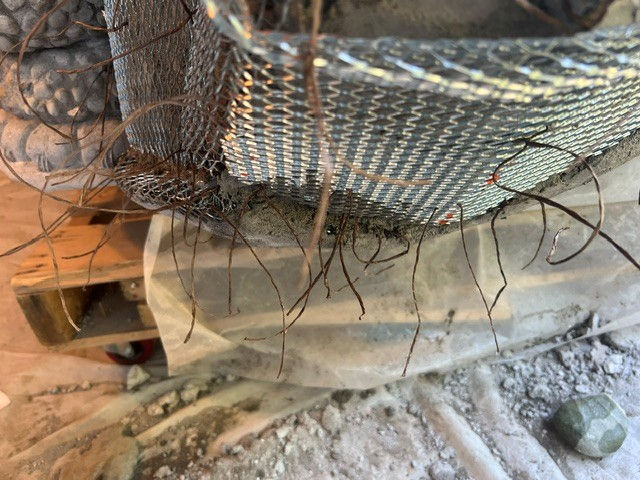
4.-5. Lower “Shell “rocks

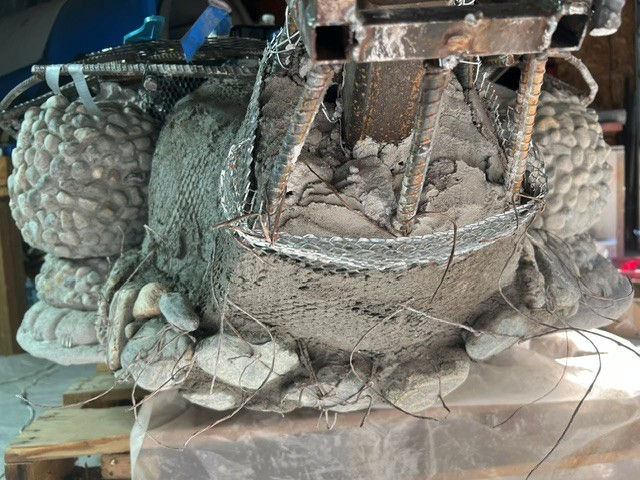
6-7 The neck almost done! And then there’s Timothy’s heart in place…permanently!


8-9 the green Styrofoam is to see how thick I’m putting on the neck for “skin”.

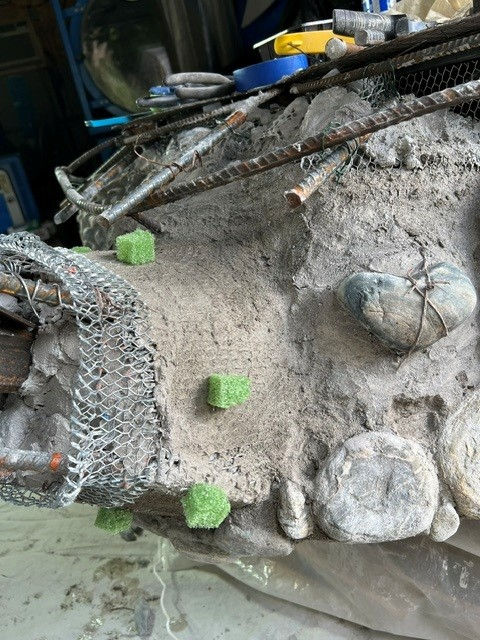
10. The neck is solid concrete, rebar and rocks now!
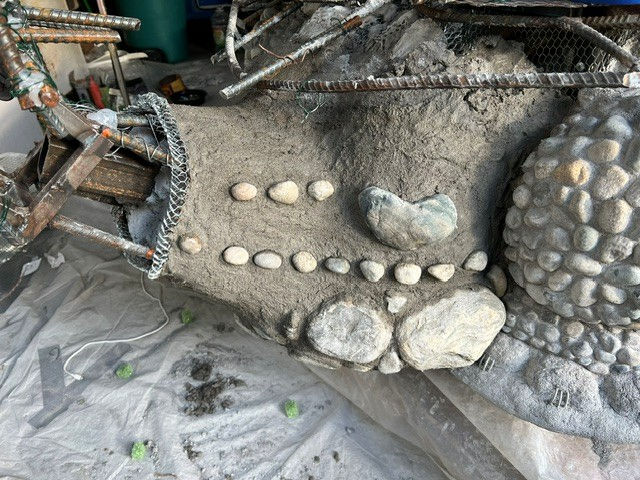
1. Now how on EARTH am I going to turn this mess into a cute face and head.
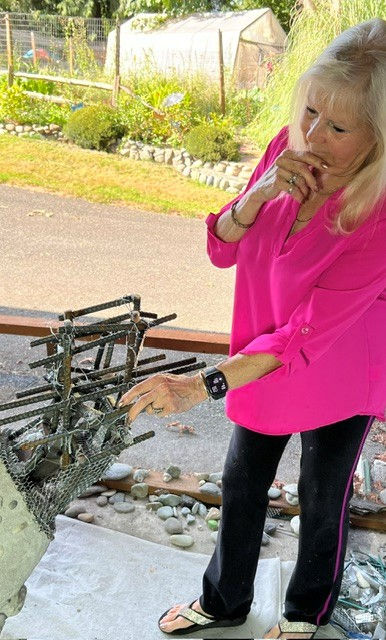
2. Again a reminder of how he’s supposed to look.

3. Only can a Mother can like a face like this…
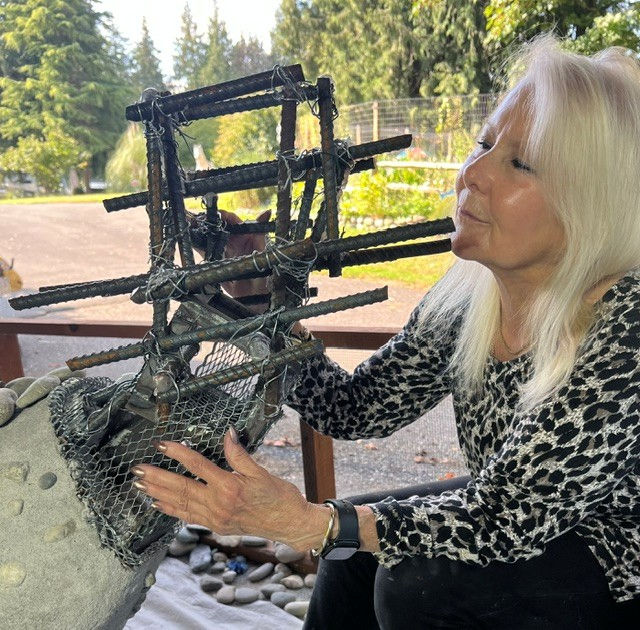
4. Trying to figure out making the first cell and where to even begin?

5-6 . Placing a “cell” inside the middle then the first cell”head concrete pour!

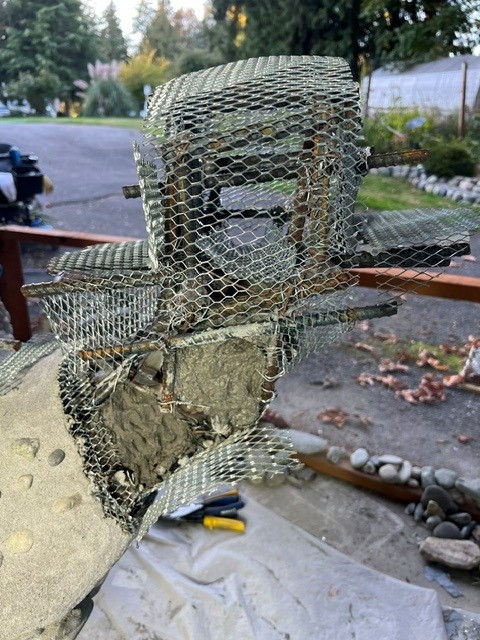
7.-8 Continuing making more cells, every day and pouring concrete.
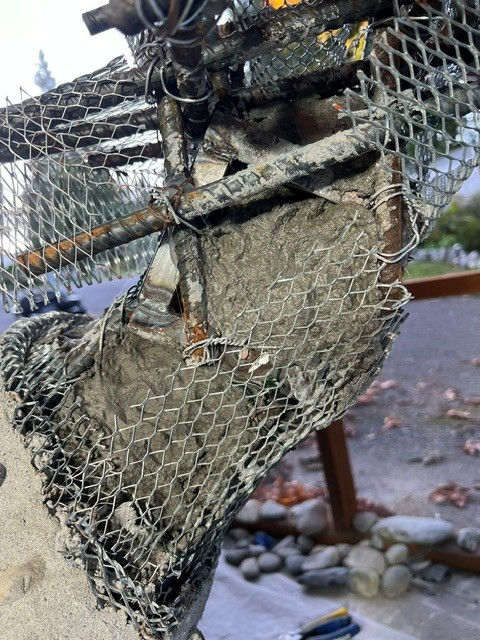

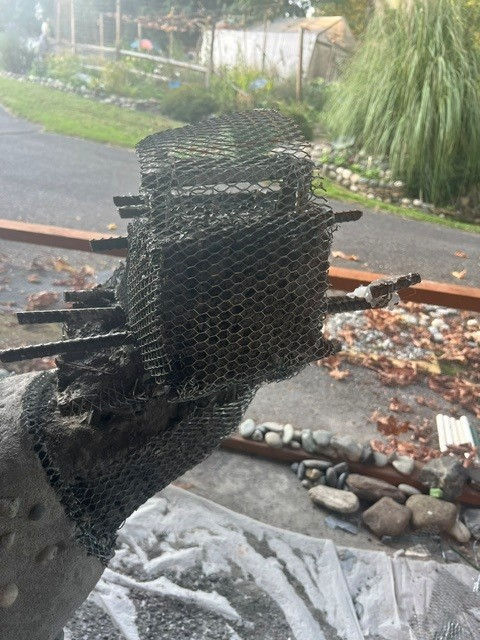
9-10 I got this tinfoil trick from the heavens just to see if I was on the right track with shape. It’s a little off but I can see where I need to fine tune an angle or length.The foil off. I put styrofoam in for the eyes ( not to scale perfectly) and the other green styrofoam guide shows me to add a little more concrete in that area to make the angle work.The end of this week… his head and face will be done!!!! Then next to his Grand Back Shell of giant rocks and Blue Cobalt Glass around the edge…

To be continued…
Preparing for Installation
Alice has worked closely with city officials and park staff to plan the installation. However, the construction of the turtle may take longer than she originally thought. She is hoping to have Timothy installed at Haller Park in the spring of 2027.

Timothy Turtle's Home Among the Art of Arlington
This sculpture will add more than just visual interest to Haller Park. It represents a commitment to public art that enriches community spaces. Timothy Turtle will invite visitors to pause, reflect, and enjoy a moment of creativity outdoors.
Alice Burgin’s work shows how art can blend with nature and local culture. The use of natural materials like rocks and the turtle theme connect the sculpture to the environment and local wildlife.
For those interested in public art, Alice’s process offers insight into the dedication and craftsmanship required. Watching Timothy Turtle come to life encourages support for future projects that bring beauty and meaning to shared spaces.


She is a dedicated, inspiring artist!